
‘Brave New World’
AI promises to transform your life—if you're around to see it.

The good news is technology is destroying traditional news monopolies; the bad news is it may be creating new digital ones.
If you think Google’s search engine is biased, wait until you see what Gemini, Google’s artificial intelligence (AI) app, comes up with. You might recall its somewhat embarrassing rollout that refused to draw moral distinctions between Elon Musk and Adolf Hitler.1 Apparently, questions over pedophilia required a similarly “nuanced answer.”2
Just a slicker and faster Wikipedia. ‘Garbage in, garbage out.’
Of course, there’s far more to AI than virtual assistants. That’s what Pope Leo recently weighed in on, citing serious concerns over this lurch towards machine-driven autonomy and “the concentration of immense digital power in the hands of a few private actors.”3 The Pope’s warning about the denigration of human dignity isn’t really about economics, it’s about power.
And who—or what—is going to wield it.
For the new Pontiff, one solution lies in the age-old Catholic doctrine of ‘subsidiarity’ where “decisions are made at the closest level possible to the persons involved,” right down to the sacrosanct family unit.4 But not, interestingly, in “any form of paternalistic or welfare-based management of societal life.”5 That would stifle “community life” and merely present people “with decisions that have already been taken.”6
Granting unlimited power to an omnipotent state or these new “technological eschatologists” touting their own way to avert ‘end times’ represents two sides of the same coin.7 “Technology is never neutral,” Leo declares, because it takes on the characteristics of those who devise, finance, regulate and use it.”8
So will AI be used to shut down dissent once and for all? Are we just putting the censors on steroids? Well, yes, says ethics professor and priest, Paulo Benanti.
He says, “the question is not who can browse the web. It is who controls what the oracle is trained to say, who shapes the models, who decides which truths get amplified and which get marginalized and who captures the economic and political power that flows from those decisions. A handful of companies and their investors hold that power. The transformations they are engineering will touch every human being; the decisions about how to engineer them will be made by very few. That asymmetry is not incidental. It is structural.”9
Politics is one thing, says the Franciscan Friar, but “Where does this leave the religious traditions—Christianity in particular?”10
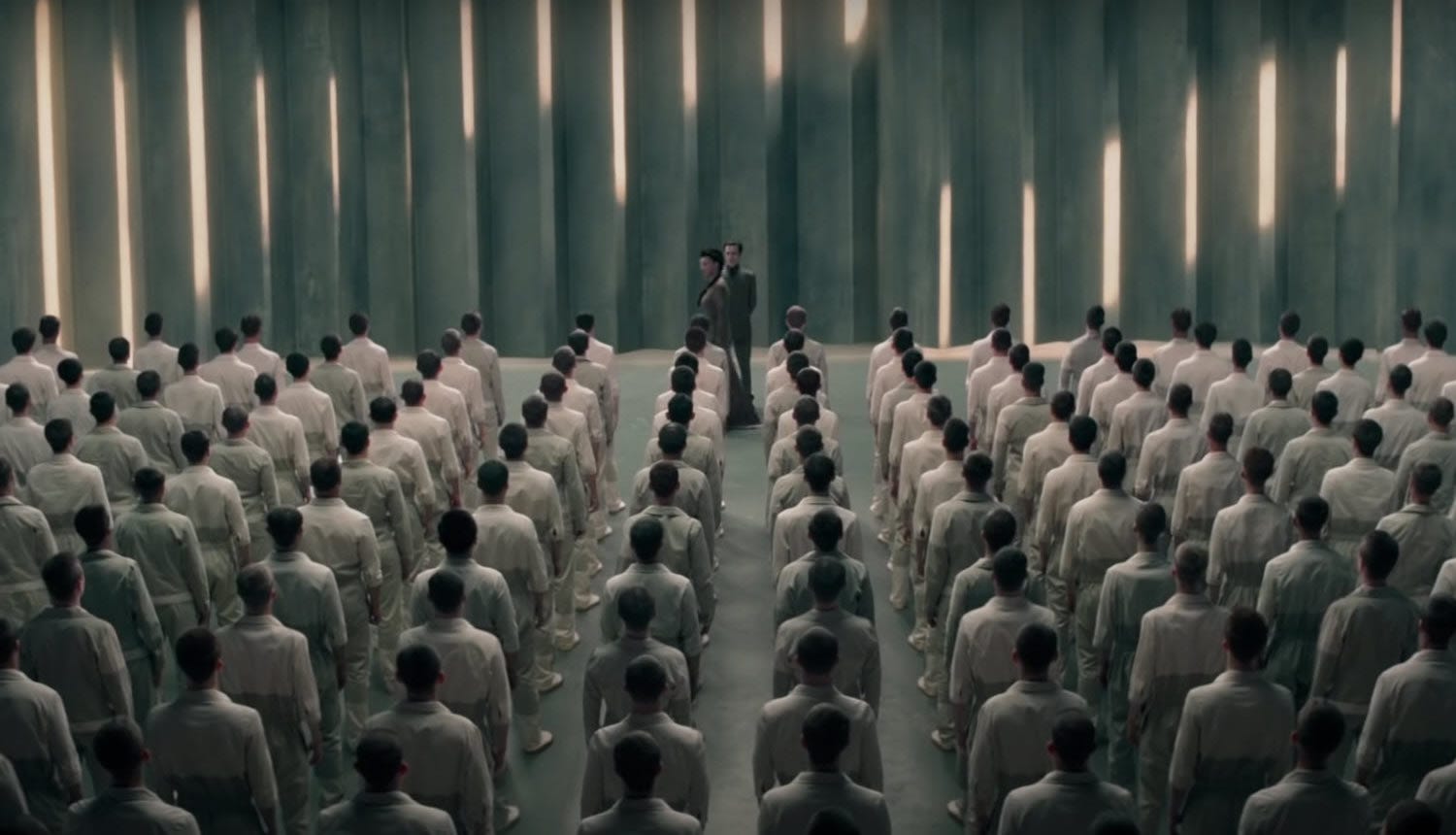
At the hands of a new Roman AI State, that’s where. Robbing every one of their most precious possession—human judgement. Succinctly, the danger of AI lies in the supremacy of maximum efficiency when maximum efficiency may run counter to what’s right.
At times, it may merely amount to a relative nuisance, as in not wanting to invest in a company with the highest ROI because you don’t like what it’s doing. But big-brother style digital surveillance is something else altogether.
And all that natural language processing (NLP) and large language modeling (LLM) has to use more and more personal interactions to accumulate more and more of your personal data in order to give you more and more personalized recommendations.
Max efficiency, it turns out, may not have much time for the ‘rights of man.’ But I guarantee it will correct the previous sentence for ‘gender neutral’ pronouns.
