
It's Over
Talk Radio (as well traditional media) has run its course.

Former PBS host of Wall $treet Week, Louis Rukeyser, was fond of repeating ‘the only constant is change.’1 It seemed appropriate for the market commentator because nowhere is the axiom more applicable than in the world of business.
I’ve witnessed two fundamental transitions in my own professional life, as I’m sure many of you have. The first was in the industrial and automotive ‘parts’ business. Vertical integration brought about the end of OEM distribution and shrinking margins from a maturing aftermarket finished off the traditional wholesale channels.
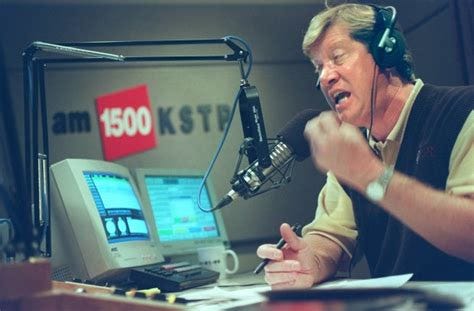
It was time to move on and I landed in broadcasting, enjoying a 25 year career in talk radio before I stepped aside not long before I was elected to Congress in 2016. Perhaps just in the nick of time.
Not that I hadn’t seen the proverbial writing on the wall, a combination of technological change and corporate cowardice led me to believe terrestrial radio was doomed far sooner than it probably was. But once the Romney-whiz kids in private equity massively overpaid for what would become the largest chain of stations in the country, the die was cast.2
And so was the ‘cancel culture.’

When Rush Limbaugh had the temerity to question the tendentious motives of Sandra Fluke—who had demanded that religious institutions (such as Georgetown) provide free contraception to students under Obamacare—the censors swooped in with a series of boycotts buoyed by Limbaugh’s longtime critics in the mainstream media.
Why, this was ‘slut-shaming,’ according to CNN’s most partisan online hack, and had to be stopped. But as Jack Reacher once said, “Well, nobody said whore. She inferred hooker, but I meant slut.”3
No matter, industry consolidation meant reliance on the biggest advertisers and their uber-woke ad houses to service the unserviceable debt. The speech police in and out of the parent company forced Limbaugh to walk back his ‘offense.’ The cannibalization of talk radio was a fait accompli.
Indeed, in the early ‘90s when I arrived back in the Twin Cities (my mother’s hometown) there were three or four spoken word radio stations with sunup to sundown local talent, many of them leaning right-of-center.
Now there are none.4
Predictably, there remain a few left-wing conformists willing to shed their dignity and fall on the financial sword. But there’s no real market for them in the digital age as both employment and compensation in what’s left of the industry so aptly demonstrate.
Indeed, lenders continue to pounce and bankruptcy rules the day.5 Insiders who own the bulk of these decaying platforms are desperately trading debt for equity just to stay afloat another day.
A few rural areas and demographically ‘mature’ markets are holding on, but most stations have morphed into studios recording podcasts for ‘on-demand’ listeners. They no longer command ‘destination listening’ and snarky texts have replaced ‘live’ callers.
You live by sword and you die by the sword. Once FM music radio became dominant, the ‘spoken word’ format was given a new lease on life on an AM band looking for content. The late, great Paul Harvey and Rush quickly filled the void.
But it wasn’t long before a few digital behemoths moved in relegating FM music radio to the dustbin along with newspapers. Talk had no choice but to switch to the FM dial, leaving the AM band vacant again.
As I wrote in Party Animal, The Truth About President Trump, Power Politics & the Partisan Press back in 2022, carmakers don’t even want to bother with AM tuners anymore.
Rush left in his wake a broadcasting format that is perilously close to being on the ropes. It faces a perfect storm of corporate advertising cowardice, unsound private equity financing, and emerging wireless platforms. Spotify CFO Barry McCarthy observed, “The long-term trend here is that everything linear [programming that starts and ends at a predetermined time] dies and everything on-demand wins.” Car companies are even giving up on terrestrial radio, instead prioritizing touch screens on the center of the dash…the old paradigm simply can’t command the advertising dollars of yesteryear. Corporate America, after all, is only too eager to boycott the most prominent conservative shows left on the AM band. As Elon Musk explained while contemplating his online investments, “The power of corporations to dictate policy is greatly enhanced if Twitter depends on advertising money to survive.”
And those advertisers have lobbyists. So now come Republicans eager to use government as a tool and pressure automakers to forget about dropping AM radio from the dashboard.6 In fact, Republicans in Congress are seeking to mandate AM tuners in all new vehicles.
It’s not as if I don’t have a soft spot for AM radio or wouldn’t like to stick it to Big Tech but let’s be honest, AM’s raison d’etre (an emergency broadcast system) simply isn’t applicable in the age of mobile devices.7
Moreover, as with all government favors, the danger lies in actually killing the marketplace of ideas that ‘talk radio’ once so ably provided.
Whenever you become institutionally dependent—whether on big corporations or government—a cacophony of conformity creeps in. Frankly, the only place to hear opinions willing to take on the most entrenched special interests these days resides with the most popular online podcasts.
Unless you think cable television does a good job reporting on their main advertiser—Big Pharma. As our new feature film project, State of Deception, demonstrates, COVID all but laid that to rest.
It doesn’t matter whether it’s spoken word terrestrial radio or cable news, you’re getting two sides of the same coin as these struggling platforms desperately try to remain relevant in a dominant wireless universe.8
MSNow and CNN shout socialist slogans while Fox News endlessly parades its ‘armchair warriors.’ Last week, when the President released classified documents highlighting something far more important—the problem with ballot integrity in America—traditional media all but ignored it.9

NBC and ABC wouldn’t even cover Trump’s prime-time address and the Murdoch media (see FNC, WSJ, et al.) empire quickly went back to attacking J.D. Vance for not being hawkish enough.10
Whether this fake debate between neoliberalism and neoconservatism will continue online is anyone’s guess. But suffice it to say these struggling ‘cable news’ outlets see their inchoate SVODs as far more of a cord-cutting necessity than anything else.
The technical transformation is evident in Comcast desperately spinning-off its media and entertainment assets (NBCUniversal) from a flailing broadband business that’s been bleeding cable customers for years.11 Dish DBS filed for bankruptcy and FNC quickly bought Roku.12
They’ll have to do more than that, however, to regain a modicum of trust after decades of spewing agitprop on behalf of the two major political parties. In fact, most viewers now see Democrats and Republicans hopelessly out of touch with average Americans who want neither socialism nor war.
Broadcast media isn’t just two steps behind newspapers, it’s passing them. Neither can monetize the internet the way nimble low-cost content creators can without the legacy expenses of overpaid and over-promised ‘journalists.’13
Limbaugh’s untimely passing may have been the coup de grâce for a format already reeling from the ‘constant of change.’ His unique brand of humor and broadcast bona fides kept the format alive longer than otherwise.
There was, after all, never a dimes worth of difference between Sean Hannity and Laura Ingram. And there still isn’t. They are boorish and predictable—something Rush never was.
Once when I was filling-in for El Rushbo, I dared to suggest that ‘reasonable people can disagree on the Iraq war.’14 A few neocons didn’t like it, but there was no major blowback from an audience who collectively seemed to reply, ‘well, that’s kinda how I feel.’
Not anymore. At least on war with Iran. As the market shrinks the niche intensifies. Today from Fox News to Fox Radio it’s the Amen Corner 24/7.
And that’s when you know it’s really over.
https://www.encyclopedia.com/arts/educational-magazines/rukeyser-louis-1933-2006
https://www.wallstreetzen.com/stocks/us/nasdaq/ihrt/ownership
https://www.wsj.com/finance/investing/private-equity-firms-are-sitting-on-a-nine-year-backlog-dbec673a?st=o2Y6rR&reflink=article_copyURL_share
https://clip.cafe/jack-reacher-2012/well-nobody-said-whore/
https://onthedial.net/2026/06/2181/
https://www.msn.com/en-us/money/companies/another-major-radio-and-tv-brand-files-chapter-11-bankruptcy/ar-AA20xiMC
https://autos.yahoo.com/policy-and-environment/articles/carmakers-want-am-radio-gone-180033829.html
https://www.thedrive.com/news/congress-is-still-trying-to-save-am-radio-do-you-even-care
https://committeetounleashprosperity.com/hotlines/first-kill-all-the-antitrust-lawyers/
https://www.whitehouse.gov/election-integrity/
https://www.wsj.com/opinion/president-vance-goes-awol-93f153d3?st=p9XJjN&reflink=article_copyURL_share
https://cordcuttersnews.com/comcast-lost-1-155-million-tv-customers-710000-internet-customers-in-2025-as-cord-cutting-2-0-grows/
https://www.msn.com/en-us/money/companies/echostar-ceo-steps-down-amid-dish-chapter-11-bankruptcy/ar-AA27AqS7
https://www.tomsguide.com/entertainment/streaming/fox-just-bought-roku-for-usd22-billion-and-it-could-be-a-disaster-for-streaming
https://www.startribune.com/newspapers-seek-help-on-pension-requirements/490758991
Golden, James, Rush On The Radio (St. Petersburg: All Seasons Press 2021) 81, 82.
the only thing I watch on Fox now is Gutfeld. His jokes are often hilarious and his monologue offers a different take on events, kind of like how Rush always had an unique take on things.
Mark Dice and Matt Walsh are good on youtube or Rumble.... there are several Canadian podcasters who hate Carney as much as I do, though I wonder if they also have the utter contempt for government that I have..... I don't think many in the general population do (thanks to Ayn Rand).
I didn't know Rush got pushed into apologizing...... I just remember listening to him as he did the riff originally.... I could hear in his voice that he knew he was walking out onto the branch and was just kind of trying to figure out a way back.....lol. His reaction to Sleep Number was hilarious; they had been his longest advertising partner but they were the first to bail during the controversy. When the dust settled and they offered / wanted to start advertising with him again, he wrote them a letter. "No."
You were my second favorite radio host, Jason, and I was happy when podcasts made it possible to download your shows when I couldn't hear them over the air, and then of course just being able to listen live on KLTK.... And you were my favorite Rush sub. Steyn often did the riffing thing like Rush did on Fluke, and you can tell he was trying to come up with a punch line, often without success....]
Anyhow, that is my two cents worth on the state of media today. Glad you and Coulter are on substack.
Sounds like a copout Jason, just because you bailed from talk radio doesn't mean it's going the way of the dodo bird. I do not see anyone ditching their car radios anytime soon even though formats are changing (Serious Radio) and you may have to push your finger against the stupid touch screens of many new cars just to turn on a radio.
It's true change is a constant but so is innovation, invention and just plain old creativity. I wouldn't be surprised to one day turn on the radio and hear some young kid who managed to convince an Elon Musk type deep pockets that he has a new take on everything and should be on the radio, somewhere.
While it's true many old newspapers are toast (deservedly so) there are some, Epoch Times as example, with a new idea providing some fraction of 260 million people who actually like to have a physical paper in their hands, that they can make it happen.